Government spends £4.7 million on Ford Pumas, helping electric SUV top the sales charts
Over 1,200 Ford Puma Gen-E models were registered in January, each eligible for the £3,750 Government grant

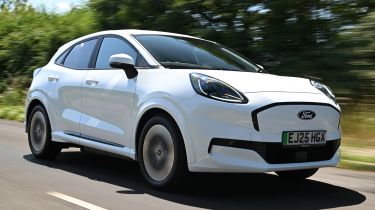
The electric Ford Puma Gen-E is the best-selling electric car of January 2026. The electrified version of Britain’s best-selling car overall qualifies for the top level of the Government’s Electric Car Grant, meaning the Treasury would have spent over £4.7 million throughout the course of last month on the Puma alone.
As many as 1,254 new examples of the Ford Puma Gen-E were registered in the first month of 2026; given the Puma has qualified for the Band 1 £3,750 grant since August 2025 – it was the first model to do so – it’s safe to say that every single one of the cars registered last month benefited from the discount.

That means the Treasury will have paid out £4,702,500 in January – just on the Puma Gen-E. If sales for Ford’s cheapest EV continue at the same pace for the remainder of the ECG’s tenure, well over £220 million of grant money will be spent on financing Ford Pumas throughout the next four years.
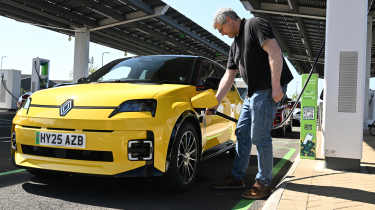
Of course, the Puma isn’t the only car to benefit from the grant; the best-selling car in terms of private sales, the Renault 5, qualifies for either the Band 1 or the £1,500 Band 2 grant, depending on model. Based on general sales patterns, roughly 700 R5 models made their way on UK roads last month, almost certainly all receiving some form of Government-backed discount.
Despite all of this investment, electric car sales actually fell month-on-month; over 144,000 new cars were registered in the UK in January, however, just 29,654 (20.6 per cent) of these were electric. While the actual number of EVs shifted is marginally (0.1 per cent) greater than those registered in January 2025, December saw more than one-in-four new car registrations being EVs, signalling a sag in demand.
CEO of chargepoint operator Pod, Melanie Lane, explained: “a slower uptake on BEV registrations in January shows how quickly momentum can stall when confidence is knocked by mixed messages on policy and costs, despite growing interest and strong underlying demand.”
These figures are concerning given the target set by the Government’s ZEV Mandate requires manufacturers ensure that a third (33 per cent) of new car sales in 2026 are fully-electric. This is set to rise year-on-year to 100 per cent in 2035, although rumours suggest that the rules could soon be slackened.
Such a loosening of the rules is supported by the Society of Motor Manufacturers and Traders’ chief executive, Mike Hawes, who said: “With sales of new pure petrol and diesel cars planned to end in less than four years, there needs to be a comprehensive review of the transition now, to ensure ambition can match reality.”
In the meantime, buyers appear to instead be shifting to plug-in hybrids; these, in theory, provide the best of both worlds between petrol and electric power and saw a significant 47.3 per cent year-on-year leap in terms of popularity. PHEVs still only accounted for around 13 per cent of all new cars registered in January and are, under the current plans, due to be phased out from new-car sales in 2035.
Nevertheless, founder of Insider Car Deals, Pat Hoy, pointed out how “January registrations are not necessarily just January demand; the numbers reflect orders taken over the last six months.”
Hoy believes much of the demand for plug-in hybrids revolves around heavy discounting: “Hybrid discounts have jumped from 8.9 per cent to 11.3 per cent – a 27 per cent increase,” he said. “EV discounts have risen too, but by less, from 11.1 per cent to 13 per cent [while] petrol has barely moved.”
Buy a car with Auto Express. Our nationwide dealer network has some fantastic cars on offer right now with new, used and leasing deals to choose from...