EU votes to backtrack on EV ambitions: petrol and diesel car sales ban watered down further
The European ENVI has voted for a new plan that could enable even more petrol and diesel cars to be sold post-2035 than previous EU proposals allowed

European lawmakers have once again voted to abolish the 2035 ban on the sale of internal combustion-engined vehicles. Under a revised plan, car manufacturers must instead demonstrate a significant reduction in CO2 emissions, effectively enabling a small number of hybrid, as well as pure-petrol or pure-diesel cars to be sold beyond 2035.
Voted for by members of the European Parliament’s Committee on the Environment, Climate and Food Safety (ENVI) 48-to-30, the ‘Fit for 55’ plan will make it a legal obligation to reduce net greenhouse gas emissions by at least 55% by 2030 compared to 1990 levels. However, following intense lobbying from the automotive sector, the legislation also includes a change to the EU’s 2035 ban on the sale of new petrol and diesel cars, which was announced back in 2023.
Under European Commission plans, car manufacturers must, from 2035, ensure that their average registration fleet CO2 emissions are 90 per cent below that of the 75g per kilometre target established in 2021. In other words, they must hit a fleet-wide emissions target of just 7.5g/km.
However, the ENVI believes Europe should row back even further; as part of its vote, the group, which covers a variety of different political viewpoints, agreed on an 87.5 per cent reduction for cars and 80 per cent for vans. Furthermore, the ENVI proposes that the 40 per cent van CO2 emission reduction required by 2030 should be reduced to just 35 per cent.
Vice-chair of the ENVI, Massimiliano Salini, said the vote “marks a turning point for the European automotive industry. Registering combustion engine cars without compensation obligations would remain possible, protecting technological freedom and restoring prospects for the entire supply chain.”
Regardless of whether the Commission’s original 90 per cent reduction or the ENVI’s even laxer proposal makes it into law, it will see the EU continuing to allow petrol and diesel vehicle sales beyond 2035 — unlike the UK which still appears to be committed to the phase-out. Cars powered by certain biofuels and e-fuels will also be classed as zero-emission, while manufacturers can offset any non-compliance by utilising low-carbon steel in production.
“Decarbonisation does not mean imposing one technology,” Salini stated. “We also recognise zero-emission vehicles powered exclusively by renewable fuels that comply with the renewable energy directive, similar to electric ones.”
All of this means the internal combustion engine could live on for much longer than we might have expected back when the 2035 ban was first conceived. In a statement last year, the European Commissioner for Climate, Net Zero and Clean Growth, Wopke Hoekstra said: "We want our industries to be the leaders of the transition to a low-carbon economy because that is what is best for our climate, competitiveness and independence.”
“Today, we are stepping in to ensure a successful clean future for the automotive sector,” they continued. “We are introducing flexibilities for manufacturers, and in turn this will have to be compensated with low-carbon steel and the use of sustainable fuels to drive down emissions.”
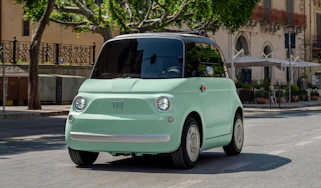
The focus isn’t all on internal combustion, though; proposed rules will enable brands to make use of so-called ‘super credits’ for small electric cars. These models (measuring under 4.3 metres in length) will each count as 1.3 vehicles against manufacturing quotas, enabling manufacturers to effectively ‘bank’ progress towards emissions targets.
Reaction from the automotive industry has been, as you might expect, mixed. On the one hand there are some brands who have dedicated their entire product line-ups to electric cars and are thus concerned that the EU’s latest decision could put their businesses at risk; staging a protest last year outside the European Commission in Brussels, Polestar’s CEO, Michael Loscheller claimed: “electric is the only way forward, and we say no to combustion engines.”
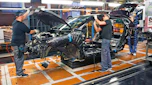
“Electrification will create long-term prosperity and jobs for the decades to come,” Loscheller continued. “Reversing course would do the opposite: extending the life of outdated industries for a few short years while the rest of the world moves ahead. Europe doesn’t have a demand problem, it has a confidence problem.”
On the other hand, several European manufacturers feel the change will offer them more breathing room at a time where their sales are being snapped up by cheaper rivals from China. In November 2025, Renault Group’s CEO, Francois Provost told Auto Express that a quarter of its R&D team is dedicated solely for catching up and complying with increasingly strict regulations.
“We need flexibility,” Provost explained. “This flexibility should be based on technological neutrality; an advanced PHEV or range extender solution is something we have to consider in order to cope with the 2035 timeline.”
Auto Express approached the Andy Burnham Government for comment.
Now you can buy a car through our network of top dealers around the UK. Search for the latest deals…