Dacia Duster and Bigster ready to tame the wild with new hybrid 150 4x4 system
The Dacia Bigster and Duster SUVs are now available with electrified all-wheel drive system for the first time

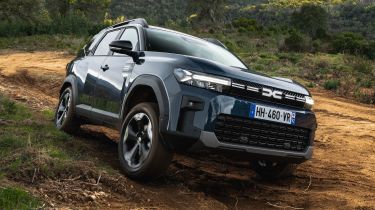
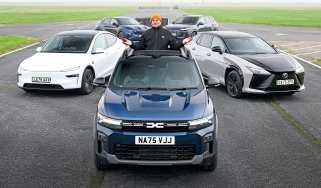
The Dacia Duster and Dacia Bigster SUVs will offer a new and even more versatile hybrid system later this year. The option features all-wheel drive and an automatic transmission – the first time this combination has been offered on either model – and will arrive in the next couple of months.
Called ‘150 4X4’, the new powertrain shares many of its core elements with the current 130 4X4 variant, including a 1.2-litre turbocharged three-cylinder petrol engine aided by a small electric motor powered by a 48V mild-hybrid system.
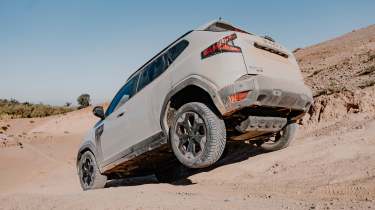
However, in addition to the front-mounted powertrain is a small rear-mounted electric motor that produces another 30bhp and 87Nm of torque. This drives the rear wheels via a two-speed gearbox, and can deliver high levels of torque at low speeds in its first gear – handy for off-roading – but is still able to maintain drive on the rear at up to 86mph in second.
As well as producing more power than the existing 130 4X4, this new set-up is also fitted with a six-speed dual-clutch transmission rather than the six-speed manual currently available. The system delivers a peak combined power of 148bhp and 230Nm of torque.
Thanks to this new set-up, the Bigster will offer an all-wheel-drive option for the first time; the line-up currently includes front-wheel-drive MHEV and full hybrid options. Full pricing and specifications for both new all-wheel-drive hybrid models will be announced closer to their arrival date.
Can't wait for the new all-wheel drive models to arrive? Check out our Buy a Car service for the latest deals on used Dacia Duster...
And there’s more to come...
Dacia will continue its rollout of hybrid powertrains through 2025 and beyond, with the brand’s boss confirming that the technology will be “growing more and more in the future”.
In an exclusive interview, CEO Denis Le Vot told Auto Express that his team will continue to utilise all the parts available to them, insisting that parent company Renault has “all the solutions” – from ICE (internal-combustion engines), to hybrid, plug-in hybrid and fully electric.
“We recoup the assets developed by the [Renault] Group,” Le Vot told us. “We put them back and make our own soup with the leftovers. We make good business with that for us, and for the clients and we manage, as a whole, the CO2 emissions of the Group.”
Le Vot told us the 1.0-litre TCe turbo (as found in the Jogger and Duster) and even the 1.6 HEV are too small for the Bigster. It’s for this reason that Dacia is utilising the new 1.8-litre hybrid in its flagship SUV – an engine born from the so-called ‘Horse’ joint venture formed in 2024 by Renault and Geely to develop new electrified powertrains.
We asked Le Vot if there might be space for Renault Group, Dacia or Horse to develop a plug-in hybrid powertrain for the Bigster and he said: “We have plug-in hybrids in the company. PHEV is in the panorama, but maybe not tomorrow morning.”
So while a plug-in hybrid is possible – and likely – its introduction doesn’t appear imminent. In 2022, Dacias accounted for a significant 7.6 per cent of the European retail market, and with so few financial incentives available to private customers, there is seemingly less reason for Le Vot to push ahead with PHEV – at least while he’s able to pool Renault’s EV mix and meet the necessary ZEV (zero-emission vehicle) mandates.
Haven't got time to wait for the Bigster? These are the best plug-in hybrids to buy...