Audi plans hidden buttons to solve its touchscreen problems
A patent filing from Audi shows a fold-out control panel of physical buttons under an infotainment screen

Manufacturers are finally clocking onto the idea that new-car buyers want proper buttons back in their cars. Volkswagen has done a great job of reintroducing real buttons, notably with the ID.3 Neo, and fellow VW Group brand Audi is working on a particularly interesting solution.
A patent filing in Germany (translated from German) notes that “Displays in vehicles are becoming increasingly larger and are positioned in a wide variety of locations within the vehicle,” and at the same time, users are wanting controls “such as switch panels”. The problem, Audi reckons, is that “physical switches also require installation space,” which can leave the cabin looking cluttered when a larger display is fitted.
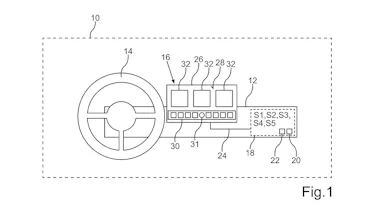
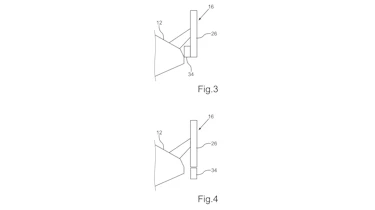
The patent’s proposed solution is a fold-out control panel under the infotainment screen containing a row of physical buttons. In the Figure 1 image included with the patent, this panel is in the stowed position, at which point a “digital twin” of the controls is displayed along the lower edge of the infotainment screen.
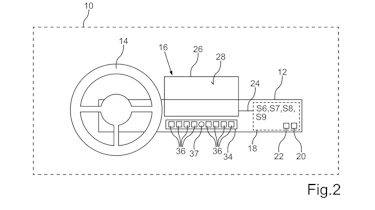
In Figure 2, the buttons are in the extended position, with the digital version of the switches no longer visible. When in this configuration, there’s a handy palm rest just in front of the buttons.
The assembly would be motorised and could be activated by a simple touch control on the infotainment display, or by a voice command. The patent insists that when in the stowed configuration, this set-up “results in a more uncluttered interior,” although it’s debatable if a row of nine physical buttons would make for an excessively ‘busy’ cabin.
A patent filing does not guarantee that this tech will ever make it to a production car. But whatever the solution, whether it’s a fold-out panel as described in the patent or by simply adding buttons in a more conventional sense, Audi will need to do something. This won’t be just to fulfil the wishes of touchscreen-weary buyers, but also for the sake of Euro NCAP ratings.
The safety body is set to place more emphasis on the placement and type of controls in cars starting from the 2029/30 assessment protocol. Vehicle controls will contribute more to the overall rating of a car, paying particular attention to things including indicators, lights and windscreen wipers. “We will allow a touchscreen for secondary controls such as heating,” Euro NCAP development boss Matthew Avery recently told Auto Express, “but they must be permanently displayed.”
Although there isn’t much data to link touchscreens to accidents, there’s no denying that using them results in more time looking away from the road. “It might take a second to use a button; it’s three-seconds-plus on average to use a touchscreen,” Avery said.
Get the latest and best car news and reviews, first! Follow Auto Express on Google today