Skoda Fabia review
If you’re after an affordable supermini with plenty of space, comfort and on-board technology, then the Skoda Fabia won’t disappoint

Our opinion on the Skoda Fabia
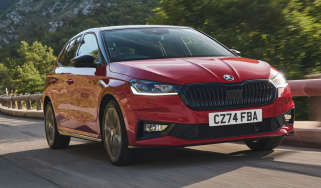
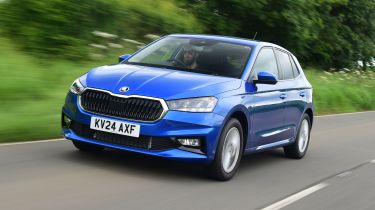
Fortunately, the Czech brand hasn’t lost sight of what has made its Skoda Fabia supermini so successful after more than 20 years in production. More practical than ever, with greater passenger space and modern on-board tech, the Fabia has been fine-tuned from what was already a pretty compelling package into one of the best superminis you can buy. Throw in some sharper styling, reassuring levels of safety kit and some keen pricing that undercuts its Volkswagen Polo sibling, and the appeal of the Skoda brand’s latest supermini is pretty obvious.
About the Skoda Fabia
It’s fair to say that today’s superminis are not the compact runabouts they once were. Always a popular choice for its mix of affordability, practicality and ease of use, the humble small hatch has faced a new era of safety regulation, combined with buyers demanding improved quality, extra space, and greater comfort. All of this has led to more sizable models being designed and brought to market.
Lucky, then, that this five-door supermini benefits from using the same MQB-A0 platform as its Polo and SEAT Ibiza cousins. This architecture also underpins the Skoda Scala family car and Skoda Kamiq SUV, and its lightness helps to keep the Fabia’s weight roughly the same as its predecessor – an impressive feat given that the newer car is both longer and wider.
Used - available now

2025 Skoda
Fabia
32,602 milesManualPetrol1.0L
Cash £11,024
2021 Skoda
Fabia
55,974 milesManualPetrol1.0L
Cash £8,880
2019 Skoda
Fabia
10,311 milesAutomaticPetrol1.0L
Cash £12,270
2018 Skoda
Fabia
34,452 milesManualPetrol1.0L
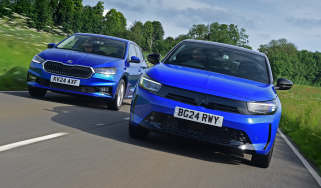
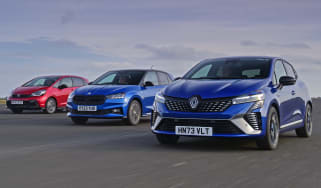
Cash £7,495We've pitted the Fabia against the Volkswagen Polo in a twin test review, and we've also put the Fabia in a triple test against the Renault Clio and Honda Jazz. We have even run a Fabia 130 as part of our long-term test fleet.
Performance & driving experience
Pros |
|
Cons |
|
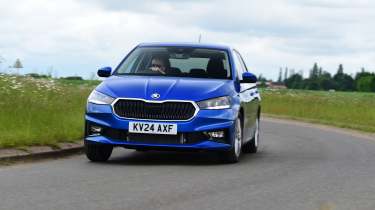
The previous generation Fabia was a decent car to drive, although it didn’t offer much entertainment once out of town and tackling the twisty stuff. The latest model utilises a newer platform, which brings increased rigidity and less weight, helping to improve handling and make the Fabia a little bit more fun, especially in top-spec 130 form.
Performance, 0-60mph acceleration and top speed
The core Fabia range won’t stun you with its sprinting ability. In fact, the base 79bhp MPI powerplant takes an eye-watering 15.7 seconds to get from 0-62mph. This won’t be a problem when you’re in town, but reaching motorway speeds will feel like an eternity.
If you can afford it, we’d highly recommend the turbocharged TSI engines as much better all-rounders. The 94bhp 1.0-litre variant brings an increased torque figure of 175Nm (compared with 93Nm for the MPI), with acceleration from 0-62mph improving to a much more respectable 10.7 seconds. Opting for the more powerful 114bhp 1.0-litre engine increases torque even further to 200Nm and reduces the sprint time to 9.3 seconds for the six-speed manual and 9.7 seconds for the DSG automatic version.
For even more grunt, the 148bhp 1.5-litre engine benefits from 250Nm of torque and manages the 0-62mph sprint in 8.0 seconds. The hottest Fabia for those craving entertainment is the Fabia 130, which also features the 1.5-litre TSI petrol engine. Here it’s cranked up to deliver 175bhp, which chops the 0-62mph time to 7.4 seconds, before romping on to a top speed of 141mph. It doesn’t quite have the performance to match a proper hot hatchback, and it’s a shame that the twin exhaust tips don’t produce a sportier engine note (something we think that buyers of this hotter model would appreciate) but it’s still among the livelier superminis on sale.
| Model | Power | 0-62mph | Top speed |
| Fabia 1.0 MPI 80 SE Edition | 79bhp | 15.7 seconds | 108mph |
| Fabia 1.0 TSI 116 SE L Edition | 114bhp | 9.3 seconds | 125mph |
| Fabia 1.5 TSI 177 130 DSG | 175bhp | 7.4 seconds | 141mph |
Town driving, visibility and parking
It might be one of the more spacious cars in this sector, but the Fabia still feels like a supermini from behind the wheel. You’ll be glad of this when navigating tight urban streets, because all-around visibility is fine. What the Fabia lacks in driving excitement (excluding the hot 130), is more than made up for in driving ease and a smooth low-speed ride. The 130 feels a little firmer and doesn’t ride as quietly as some rivals – there’s a little more road noise on coarse or broken surfaces – but still does a good job of rounding off bumps.
If you’re doing a lot of stop-start driving, we’d recommend opting for a manual gearbox rather than the DSG automatic. The latter can be frustratingly jerky at slower speeds, which is quite jarring when performing manoeuvres, such as trying to park.
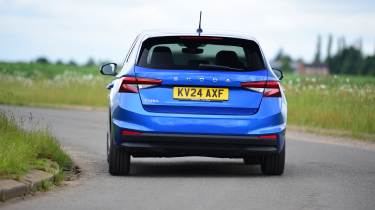
Country road driving and handling
The core Fabia line-up focuses on comfort rather than performance and delivers an easy, relaxing drive. The soft suspension results in more body lean while cornering than we expected, but it does so in a controlled and predictable manner.
The five- and six-speed manual gearboxes are typically light, but remain reassuringly accurate and precise when shifting. For those who prefer an automatic, the seven-speed DSG, which is an option with the larger engines, copes far better at higher speeds on the open road than it does in town.
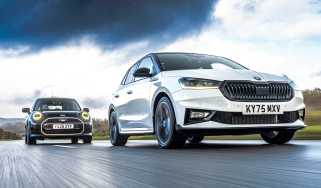
Along with its 175bhp output, the hotter Fabia 130 gets a ‘Sport Chassis’, sitting 15mm lower than other Fabias, with revised suspension and steering. Ride quality hasn’t suffered too much with the sportier set-up, but the 130 feels more responsive and a little more engaging than the rest of the range. It resists body lean better than the standard car and dives into corners more keenly. While not as agile as a MINI Cooper or the old Ford Fiesta ST, it still offers some fun for driving enthusiasts.
Motorway driving and long-distance comfort
The Fabia’s focus on comfort means it’s one of the smoother superminis when it reaches motorway speeds. It's also quiet in the cabin most of the time, but we did notice some tyre roar as we moved closer to the 70mph national speed limit.
The turbocharged 1.0 TSI petrol engine has been revised during the Fabia’s lifetime, and its power has gradually been boosted, culminating in a choice of either 94bhp or 114bhp. The latter is a particularly good match for the Fabia, providing sufficient extra power and torque to ensure you won’t have to work it too hard to make decent progress. Its extra gear ratios help to keep the noise down by keeping the revs lower. However, be careful not to mix this engine up with the base 1.0 MPI, because this unit feels particularly strained when pushed hard. We’d only go for it if you really want to save the pennies.
Naturally, the largest 1.5 TSI engine copes even better with higher speeds, especially in the Fabia 130, where there’s enough performance to make light work of motorway slip roads and overtaking, and it does a pretty good impression of a larger car at cruising speeds. It’s worth knocking it down a gear or two manually if you want to make progress though, as in Comfort mode at least, the DSG is a little lazy to respond to prods of the accelerator alone.
MPG & running costs
Pros |
|
Cons |
|
Skoda has opted not to include mild or plug-in hybrid tech in the latest iteration of the Fabia. However, it has improved the efficiency of the existing MPI and TSI petrol engines. The brand claims you’ll see around 54.8mpg with the 79bhp MPI, and around 56mpg from both the 94bhp and 114bhp 1.0-litre TSI engines when fitted with a manual gearbox.
Fuel economy dips slightly if you opt for the DSG automatic. At most, you’ll see 53.5mpg on the WLTP combined cycle from the 114bhp engine, dropping slightly to 53mpg for the 148bhp unit.
While more exciting cars often mean dreary efficiency, the Skoda Fabia 130’s stats are still pretty good by hot hatch standards. So the good news is that it’s still frugal enough to be an everyday car. Skoda claims a maximum of 50.7mpg if you don’t constantly have your right foot on the floor, and this is still highly respectable. During our recent test of the 130, the car returned just under 50mpg in congested motorway driving, and dropped to nearer 40mpg in mixed use with some country road driving thrown in; both are decent real-world figures given the extra performance.
The smaller engines are even more frugal though. After covering nearly 9,000 miles in our Skoda Fabia 1.0 TSI long-term test car, we averaged 55.4mpg, which is impressive considering the lack of hybrid technology. That said, if fuel economy is a priority for you, during our group test against the Skoda Fabia and (now defunct) Ford Fiesta, the full-hybrid Toyota Yaris returned 68.8mpg, compared with 55.4mpg from the Skoda and the Ford's 58.9mpg.
| Model | MPG | CO2 | Insurance group |
| Fabia 1.0 MPI 80 SE Edition | 54.8mpg | 117g/km | 4 |
| Fabia 1.0 TSI 116 SE L Edition | 53.5mpg | 114g/km | 15 |
| Fabia 1.5 TSI 177 130 DSG | 50.7mpg | 126g/km | 22 |
Insurance groups
Insurance premiums for the Fabia shouldn't be too alarming. In fact, the 1.0 MPI is one of the cheapest cars to insure in the UK, because it only sits in group 4 out of 50. However, you���ll have to be willing to endure its meagre performance, which is one of the reasons why it’s rated so low.
The TSI-powered members of the line-up sit between groups 11 and 20, while the higher-powered Fabia 130 pushes insurance up to group 22.
In comparison, the Fabia’s sibling, the Volkswagen Polo, ranges from groups 3 to 23. The Renault Clio, meanwhile, finds itself in groups 10 to 15, but it’s worth noting that there’s no hot variant of this supermini.
Check if your car needs an MoT and view its complete history with our MoT History Checker...
Tax
Company car buyers who want to make big savings on Benefit-in-Kind (BiK) tax will be better off looking towards the growing electric supermini market. Models such as the Renault 5 and BYD Dolphin sit as low as three per cent.
Depreciation
Our expert data suggests that residual values for the Skoda Fabia supermini remain on par with rivals, because it is expected to retain between 43 and 48 per cent of its initial value after a period of three years or 36,000 miles. The badge appeal of the Volkswagen Polo does give it a slight advantage, because it holds on to 48 to 52 per cent. The Clio performs even better, maintaining an average of 49 to 56 per cent.
To get an accurate valuation on a specific model check out our free car valuation tool…
Interior, design & technology
Pros |
|
Cons |
|
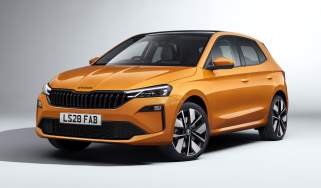
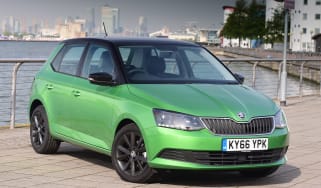
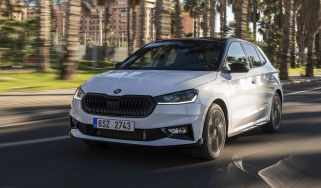
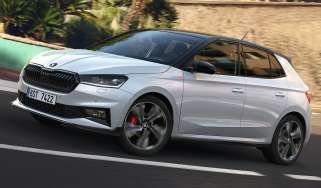
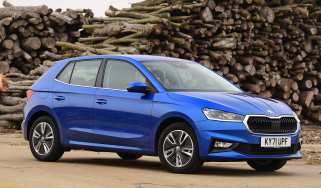
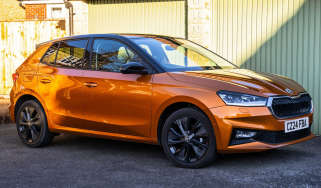
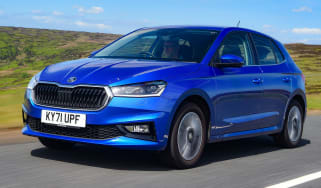
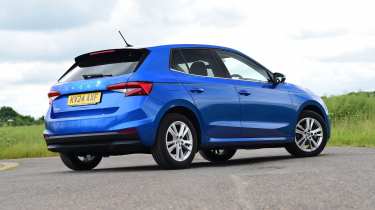
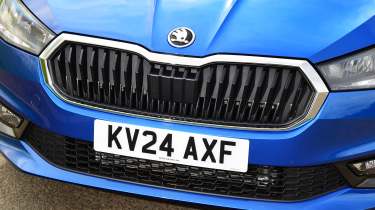
The fourth-generation Skoda Fabia is a bigger car than its predecessor and, with its sharper exterior styling, it cuts a more modern shape on the road. The front end includes Skoda’s latest grille and swept-back headlights, along with active cooling vents in the lower bumper that can shut to improve efficiency when travelling at cruising speeds.
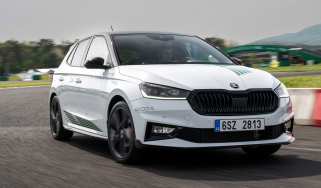
At the rear, Skoda has included wider light clusters, a tailgate spoiler and the brand script is written across the boot lid, which all helps inject some much-needed flair into the Fabia’s appearance. Monte Carlo models add a sportier bodykit and black detailing to help them stand out.
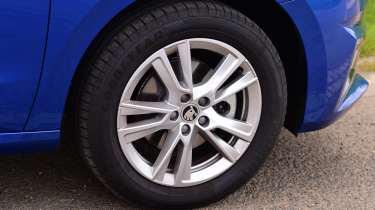
The range-topping Fabia 130 takes this a couple of steps further, although it doesn’t quite have the full hot-hatch warpaint of its vRS predecessors. However, an extended rear spoiler, Fabia 130 decals, smart 18-inch diamond-cut alloy wheels, red brake calipers and dark chrome-finish twin tailpipes give it some attitude. The 130’s three colour options stand out too, with Velvet Red, Race Blue and Moon White (each with a contrasting black roof) all suiting the sporty styling additions.
Interior and dashboard design
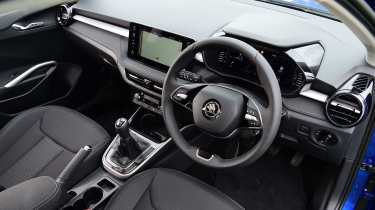
The Skoda’s stylish theme continues inside, with the cabin finished in surprisingly high-quality materials and a clear, well organised dash layout. It all combines to deliver an appealing package, although we feel the Peugeot 208 still just about edges ahead of the Fabia for interior charm.
Skoda’s reputation for sensible and ergonomic design is on full display here, because the Fabia’s controls are straightforward to use on the move. Some functions are hidden within the touchscreen, but just about everything you’re likely to regularly use has a physical control, from the air conditioning, to turning off the lane-keep system and speed warnings (using buttons on the steering wheel), and the buttons for heated seats and the heated steering wheel, where fitted.
The sporty Fabia 130 gets a pair of striped, well bolstered seats similar to those of the Monte Carlo, plus a three-spoke sports steering wheel, a black headlining, and aluminium pedal trims. It won’t get you much cred at a trackday, but it’s a bit racier than the somewhat subdued cabin of the standard car.
Materials and build quality
While a number of lower-cost materials are vital for keeping the Fabia’s price in check, Skoda has done a pretty decent job of making its supermini feel reasonably fancy inside. It feels generally well put together, and most of the materials feel of a similar quality to those in a Volkswagen Polo, though we did notice some buzzing trim when testing the Fabia 130 – hopefully just a quirk of that particular car.
Infotainment, sat-nav and stereo
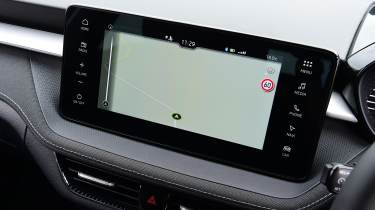
The Fabia gets the same infotainment technology that’s used across other VW Group brands. The entry-level 8.25-inch touchscreen controlling the in-car media looks smart, with sharp graphics, although it could be quicker to load certain functions. Higher-spec SE L models and above feature the Amundsen infotainment set-up, with a larger 9.2-inch display that makes things easier to read, and includes standard sat-nav. Large on-screen tiles help with navigating the car’s assorted settings. Hooking up a phone via Bluetooth to Apple CarPlay and Android Auto is fairly painless too. Some models feature a wireless phone charging pad in the centre console, which works well but can be a little picky about exactly where you put your phone.
Design Edition trim and above add a 10.25-inch Virtual Cockpit digital instrument display, with a variety of useful screen layouts (including some satisfyingly sporty-looking arrangements in the Fabia 130) and information that is easy to read and switch between while on the move. We think it’s a better set-up than any of the systems in the Fabia's closest rivals.
One interesting quirk of the Fabia’s layout is that it comes with a manual handbrake, even in versions that feature keyless entry and a push-button starter. It’s often the case that cars with a keyless set-up also feature an electric handbrake, but not with the Fabia." - Dean Gibson, senior road test editor.
Boot space & practicality
Pros |
|
Cons |
|
Skoda only offers the Fabia as a five-door hatchback, and an estate version is no longer on the menu. Buyers seeking a few more creature comforts and useful standard kit (such as manual lumbar adjustment, cruise control, the 10.25-inch digital instrument cluster mentioned in the previous section, and electric rear windows) might want to upgrade to the Design Edition trim, but the base SE Edition trim is still well equipped and includes rear parking sensors, a multifunction steering wheel, height adjustment for the driver’s seat and air-conditioning.
If you want to add further equipment, there are various optional packs that allow you to specify items such as heated seats, a heated windscreen, a wireless smartphone charging pad, and front parking sensors.
If you need to fit child seats, there are the usual two Isofix mounts for the outer rear seats, and another set on the front passenger seat, too.
Dimensions and size
The latest Fabia has a bigger footprint than its predecessor, measuring 4,137mm long, 1,780mm wide, and 1,482mm tall. In comparison, the Renault Clio isn’t as long at 4,053mm, although it is slightly wider at 1,798mm.
| Dimensions comparison | |||
| Model | Skoda Fabia | Renault Clio | Vauxhall Corsa |
| Length | 4,137mm | 4,053mm | 4,060mm |
| Width | 1,780mm | 1,798mm | 1,745mm |
| Height | 1,482mm | 1,440mm | 1,433mm |
| Wheelbase | 2,549mm | 2,583mm | 2,538mm |
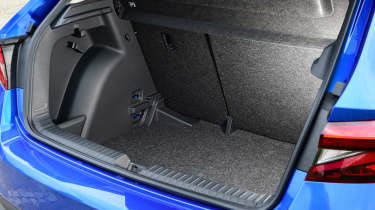
| Boot space | 380-1,190 litres | 284-1,069 litres | 309-1,118 litres |
Seats & passenger space
The Fabia’s extra length means its cabin is more spacious than the previous generation’s. The driver and front passenger should easily find a comfortable seating position, while those travelling in the rear benefit from good knee room and enough space under the front seats to slide your feet into. The chunky sports seats of the Monte Carlo Edition and Fabia 130 eat into rear-seat space a little, but a couple of average-sized adults can still fit one behind the other. Headroom is good, too, even if you specify the optional panoramic glass roof.
That said, it may be a squeeze to seat three across the back, as you'd expect in any supermini, because the Fabia's rather large transmission tunnel eats up a lot of foot space. Rear passengers get various pockets on the back of the front seats, with one regular-sized map pocket and some shallower ones designed for smartphones.
Boot space
The previous-generation Fabia had a decent 330-litre boot, including handy luggage hooks and useful compartments for assorted oddments. The fourth-generation model offers similar practical touches but with an increased 380-litre load space, beating the 355 litres of space offered in the SEAT Ibiza or the 328 litres found in the Dacia Sandero. If you fold the rear seats, the luggage capacity in the Fabia rises to 1,190 litres.
It’s a marker of how close today’s superminis are to more traditional hatchbacks that you’ll find a similarly sized 380-litre boot in the Volkswagen Golf Mk8.
Reliability & safety
Pros |
|
Cons |
|
It’s a supermini, but the Skoda Fabia comes with big-car levels of safety kit. The entry-level SE Edition model has an autonomous emergency braking system (AEB). It helps avoid or mitigate potential collisions with other vehicles, pedestrians, and cyclists at low speeds by automatically applying the brakes if an impending collision is detected. The base car also features lane-keeping assist, which can identify an unintended lane departure and automatically correct the steering.
The fourth-generation Fabia achieved the full five-star rating when it was put through Euro NCAP's battery of crash safety tests in 2021. It received an 85 per cent score for adult occupant protection and 81 per cent in the child occupant protection category.
The Fabia didn't feature in the most Driver Power owner satisfaction survey, but Skoda only managed a middling 12th position out of 31 brands in the best car manufacturers poll. While this isn’t a headline-grabbing score, it did at least place Skoda well ahead of VW (27th).
| Euro NCAP safety ratings | |
| Euro NCAP safety rating | Five stars (2021) |
| Adult occupant protection | 85% |
| Child occupant protection | 81% |
| Vulnerable road user protection | 70% |
| Safety assist | 71% |
Buying and owning
Best buy: Skoda Fabia 1.0 TSI SE L Edition
The Fabia line-up starts with the SE Edition trim, which is priced from around £21,000. The mid-spec Design Edition comes in at closer to £22,000, while the kitted-out SE L trim pushes the price up to nearly £24,000. For the sporting enthusiast, there’s the Fabia Monte Carlo, which brings in unique cosmetic interior and exterior tweaks, and this’ll set you back just under £24,500.
The Fabia 130 helps to fill the void left by the loss of the Fabia vRS. It has the most power of any model in the Fabia range from its 175bhp 1.5-litre engine, an injection of hot hatch attitude into the styling and lowered suspension. It starts at £30,000, about £3,000 more than a Fabia Monte Carlo with the less powerful 148bhp 1.5-litre.
We think it's worthwhile forking out for the SE L Edition trim, because it's still affordable and comes with the best technology the Fabia has to offer. This trim comes with the more powerful 114bhp 1.0-litre TSI engine, which gives the Fabia a six-speed gearbox that offers a little more capability and refinement for both shorter and longer journeys while still being efficient.
Whichever variant takes your fancy, you can save an average of up to £1,900 when you build your perfect Skoda Fabia through the Auto Express Buy a Car service. We also have a wide selection of new Fabia deals, along with plenty of used Skoda Fabias in stock right now.
Skoda Fabia alternatives
While the Fabia still has to face the challenge presented by established supermini rivals including the Renault Clio, Peugeot 208 and Vauxhall Corsa, it also has to stand up to its own siblings, the Volkswagen Polo and SEAT Ibiza. If that wasn’t enough, there are also a number of hybrid-powered competitors from further afield to consider, such as the Toyota Yaris, Honda Jazz and Mazda 2 Hybrid.
On top of all this, there are also an increasing number of electric competitors entering the ring. The Renault 5, Fiat Grande Panda and BYD Dolphin all bring mega efficiency with low running costs, and they’re also a far better option for company car drivers.
If you’re considering the Fabia 130, then pickings these days are actually pretty slim in the sporty supermini market. The MINI Cooper and Cooper S fall either side of the 130 on price and have the most up-for-it handling and most sprightly performance in this class right now. The oft-forgotten Volkswagen Polo GTI is still available too, starting at around £1,500 more than the Fabia 130 and offering more power, at 204bhp. There’s always the electric option too: an Alpine A290 GT matches the Skoda from 0-62mph, is more engaging to drive, and pricing starts at £30,245 with the government’s £3,750 Electric Car Grant included.
Skoda Fabia pictures
Key updates of the Skoda Fabia review
3 June 2026: General update including the latest resale valuation data.
Frequently Asked Questions
Skoda provides a three-year/60,000-mile warranty with the Fabia, along with three years of European-wide roadside assistance. At an additional cost, the warranty can be extended for an extra two years.
Deals on the Fabia and alternatives